
Moving from care-focused medicine to a science of risk and prevention

Visual identity, video production & graphics: Ines Kedjem

  • Dr. Anne Beinier

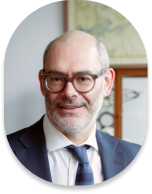
Dr. Anne Beinier’s presentation highlights the urgent need to shift healthcare systems from curative models toward anticipation and risk management.
In the context of demographic aging and rising chronic diseases, the priority is to increase healthy life expectancy.
She advocates for a systemic “One Health” approach, integrating environmental, social, and behavioral determinants.

Health considerations must be embedded across all public policies to reduce preventable diseases.
The concept of primordial health aims to prevent the emergence of risk factors themselves.
This requires long-term structural actions targeting lifestyles and living environments.
Prevention also represents a powerful driver of economic efficiency within healthcare systems.
Programs focused on at-risk populations demonstrate significant returns on investment.
Organizational transformation and better recognition of healthcare professionals and caregivers are essential.
Preventing loss of autonomy is therefore a major health, economic, and societal imperative.

Prevention in the One Health era

Visual identity, video production & graphics: Ines Kedjem

  • Vincent Maréchal, expert in prevention, health and well-being

    Prof. Vincent Maréchal

Professor Vincent Maréchal’s presentation highlights environmental surveillance as a strategic tool for prevention.
Within the One Health framework, it emphasizes the interconnection between human, animal, and environmental health.
Wastewater epidemiology enables continuous, collective, and non-invasive monitoring of population health.

It detects viruses, microbes, and health-related markers without relying on large-scale individual testing.
Monitoring SARS-CoV-2 in wastewater demonstrated the ability to anticipate epidemic waves by 7 to 10 days.
A national wastewater network now supports large-scale monitoring at significantly lower cost.
This approach serves as a multi-pathogen platform, identifying emerging viruses, polioviruses, and HPV.
It provides reliable indicators to guide vaccination policies and preventive strategies.
Wastewater data have become a valuable decision-support tool for public health authorities.
However, this innovation raises ethical considerations and represents a paradigm shift in health risk management.